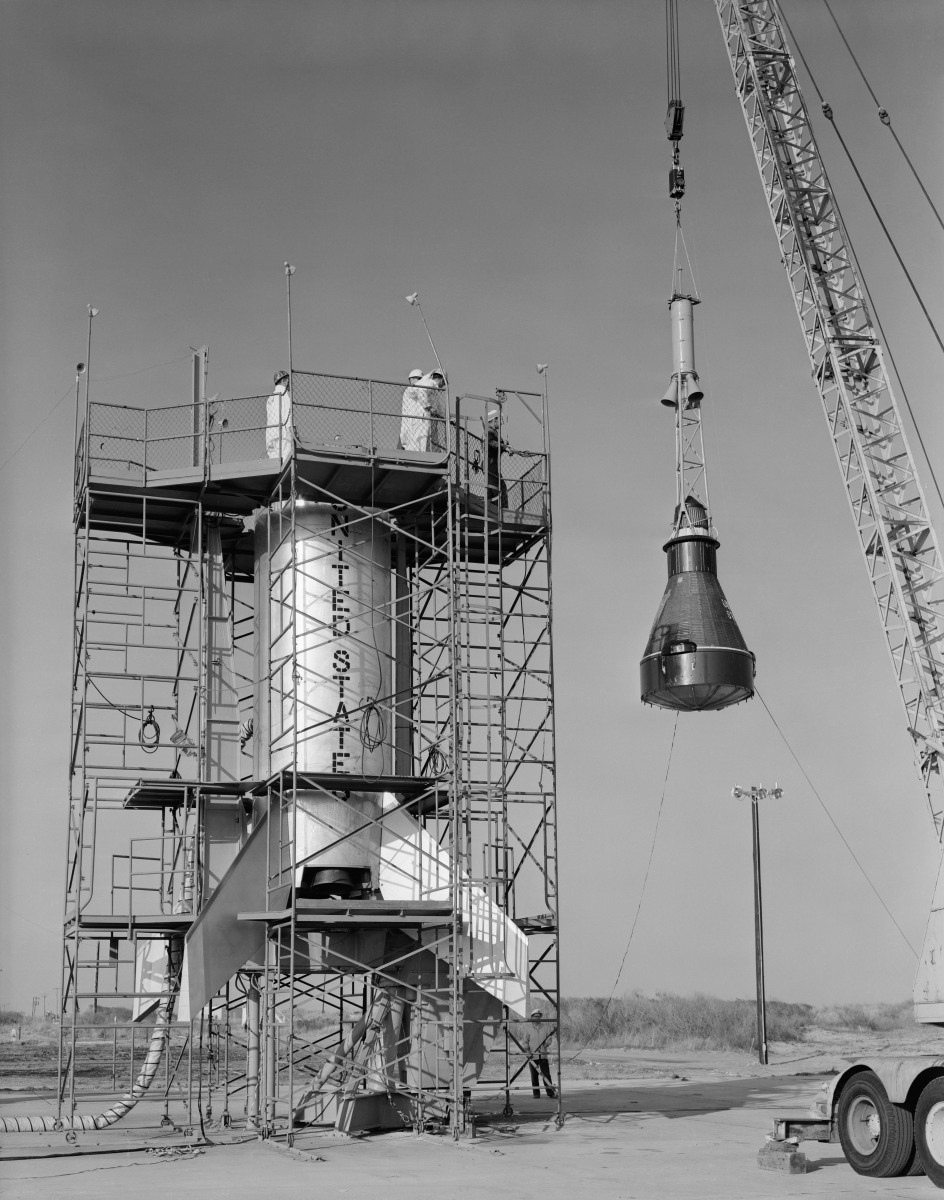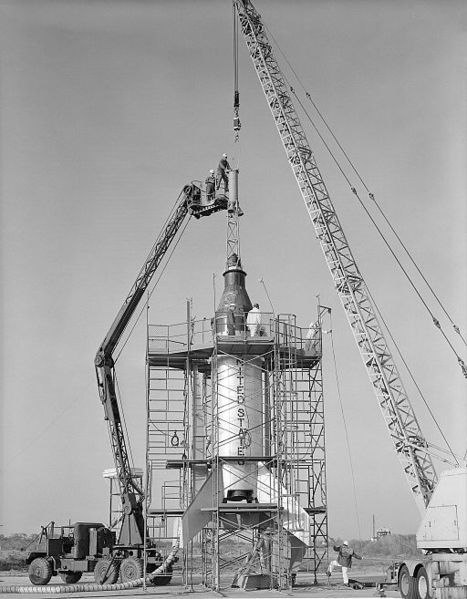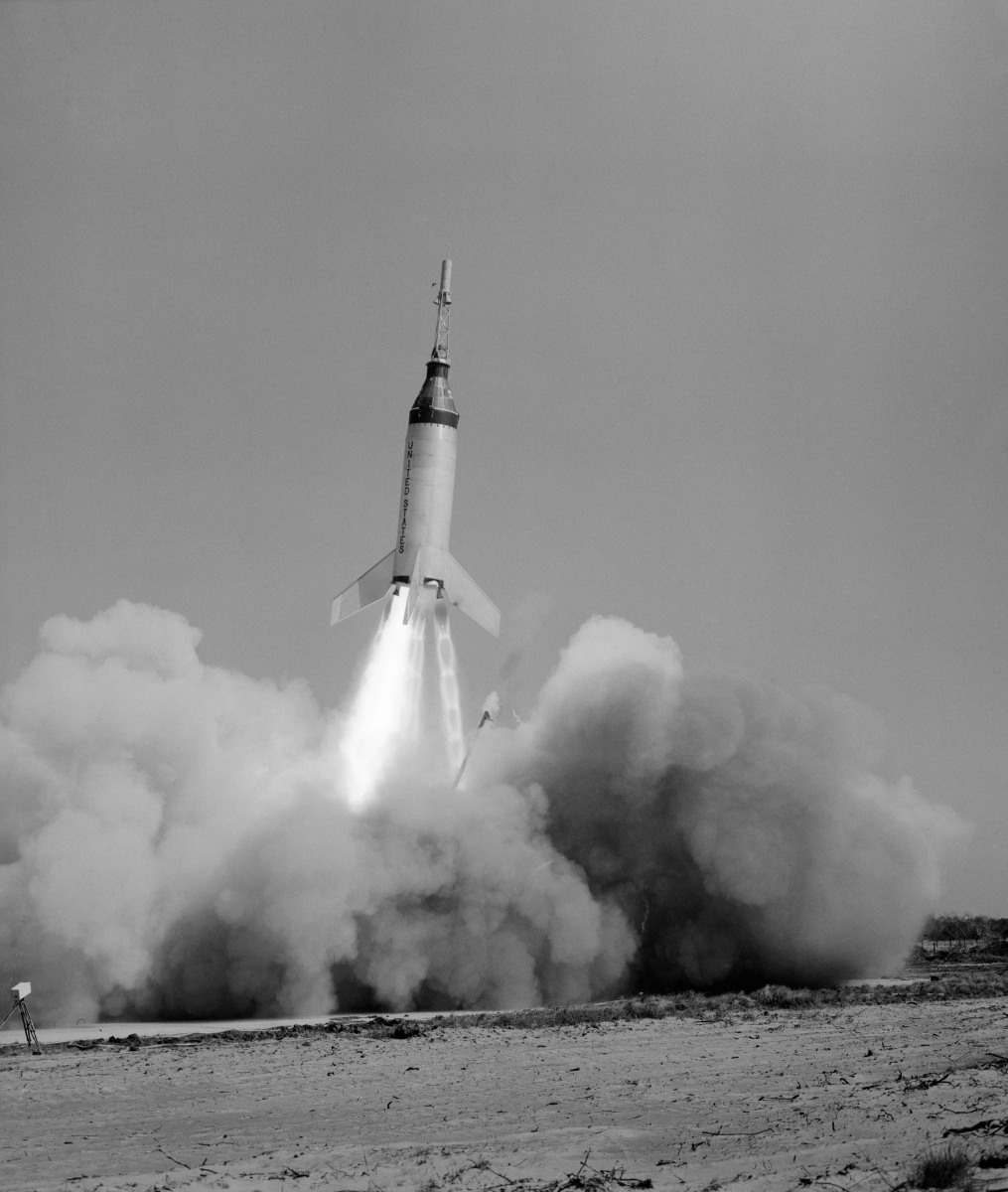
Little Joe 5B (LJ-5B) was an unmanned test flight as part of the Mercury program, the United States’ first manned space program, to test the rescue system.
The flight was a repeat of the failed Little-Joe 5A mission, which in turn was a repeat of Little-Joe 5. The Mercury capsule no. 14) could be reused after an overhaul under the designation Mercury capsule no. 14A.
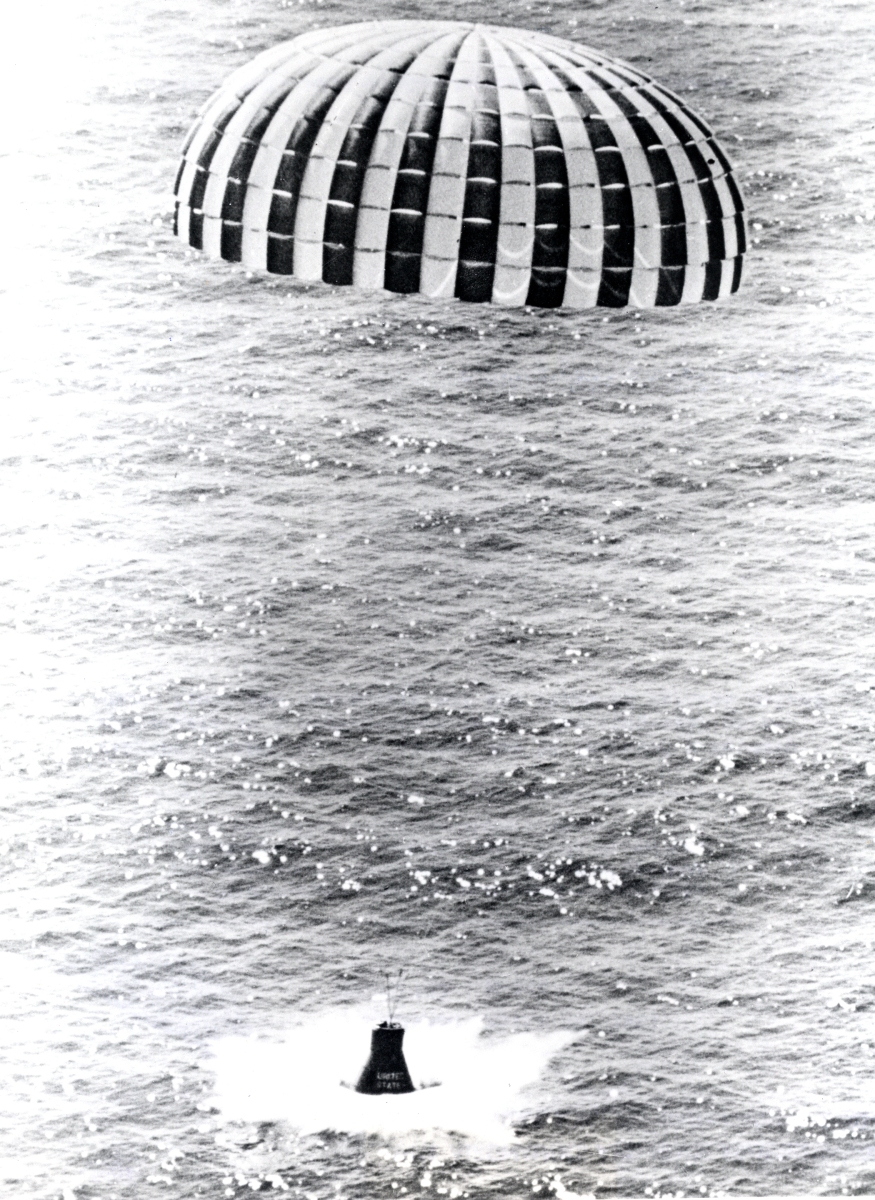
LJ-5B was launched on April 28, 1961 from Wallops Island, Virginia. This time the flight went as planned and the capsule was pulled from the Little Joe rocket by the rescue rocket after 33 seconds as planned. It reached a height of 4.5 km and covered a distance of 14.5 km. The mission lasted 5 minutes and 25 seconds. The capsule splashed into the Atlantic Ocean and was recovered by a helicopter shortly afterwards.
Mission data |
|
|---|---|
Mission |
Mercury-Little-Joe 5B (LJ-5B) |
Rocket |
Little Joe |
Spacecraft |
Mercury capsule no. 14A |
Mass |
1,141 kg |
Crew |
unmanned |
Launch date |
April 28, 1961, 14:03:00 UTC |
Launch site |
Launch Area 4 (LA-4), Wallops Flight Facility, Virginia |
Landing |
April 28, 1961, 14:08:25 UTC |
Landing site |
Atlantic Ocean |
Recovery ship |
US Marine Corps helicopter |
Orbits |
suborbital flight |
Mission duration |
0 h 5 min 25 sec |
Altitude |
4.5 km |
Distance |
14.5 km |
Velocity |
2,864 km/h |
Max G |
10 g |