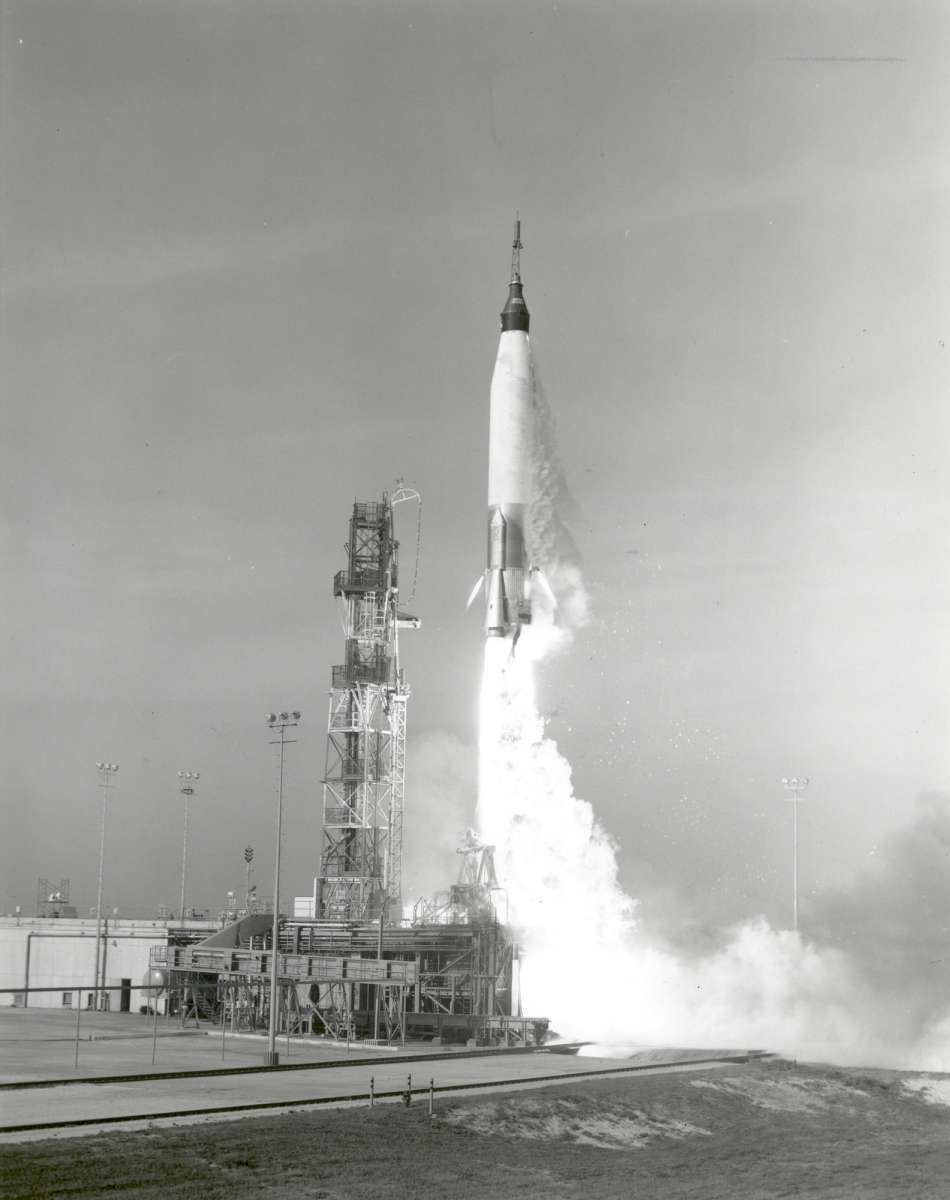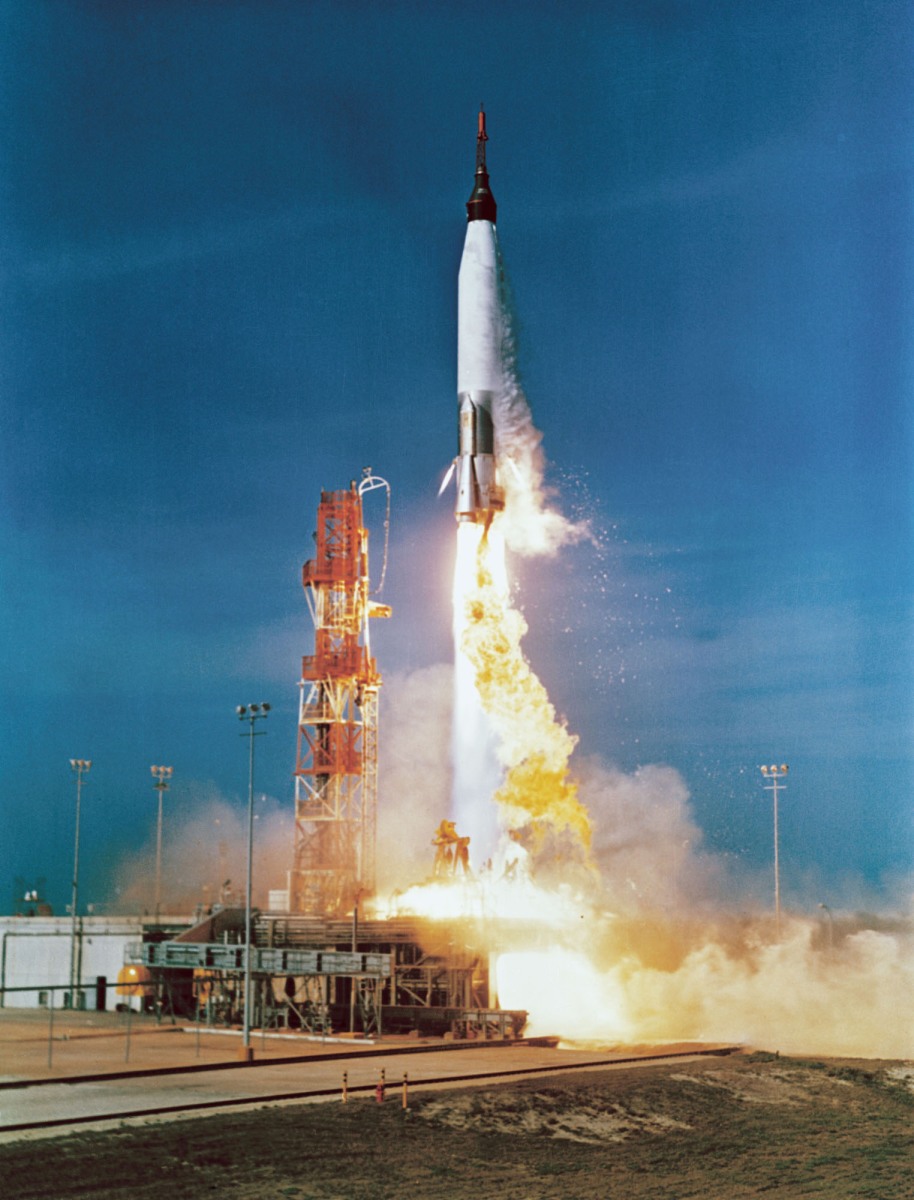
Mercury-Atlas 2 (MA-2) was an unmanned, suborbital test flight as part of the Mercury program.
The main aim of this mission was to test the re-entry behavior of the capsule under the worst flight abort conditions. In addition, the Atlas rocket was supposed to demonstrate that it could achieve the required entry coordinates. A special atlas used only for this mission was used. It had a special reinforcement band to prevent failure like the previous Mercury-Atlas 1 flight. The Mercury capsule (Mercury spacecraft no. 6) and the Atlas 67-D were used in this mission.
The launch took place on February 21, 1961 at 14:12:00 UTC from Launch Complex 14 (LC-14) at Cape Canaveral. The flight time was 17 minutes and 56 seconds. MA-2 reached an altitude of 183 km and covered a distance of 2,305 km.
The flight was successful and the Mercury capsule was recovered by a helicopter 24 minutes after splashing down in the Atlantic.
Mission data |
|
|---|---|
Mission |
Mercury-Atlas 2 (MA-2) |
Rocket |
Atlas LV-3B 67-D |
Spacecraft |
Mercury capsule no. 6 |
Mass |
1,154 kg |
Crew |
unmanned |
Launch |
February 21, 1961, 14:12:00 UTC |
Launch site |
Launch Complex 14 (LC-14), Cape Canaveral, Florida |
Landing |
February 21, 1961, 14:29:56 UTC |
Landing site |
Atlantic Ocean |
Recovery ship |
USS Donner |
Orbits |
suborbital flight |
Mission duration |
0 h 17 min 56 sec |
Altitude |
183 km |
Distance |
2,305 km |
Velocity |
21,287 km/h |
Max G |
15.9 g |